Daylily Stickers!
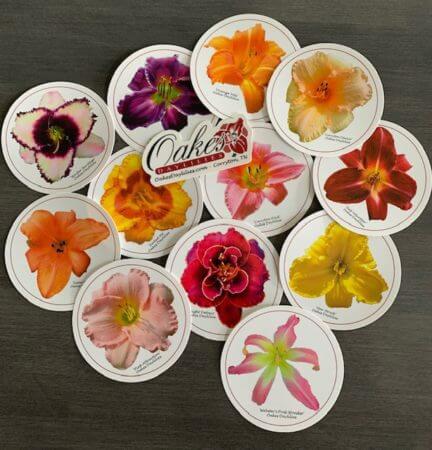
After the year we’ve all had, we’re trying to wring whatever joy we can find out of every day— even Tax Day*. So we put our thinking caps on and thought, “What is silly and fun and makes everyone happy?”.
That’s when it hit us: stickers! To make your day brighter, we are offering 13 stickers free with every order today through April 19!!!
Stick ’em on your water bottle, your cooler, your laptop (even your wheelbarrow!) or wherever else you could use a bit of cheery color.
*We know that Tax Day has officially been moved to May 17. Since today is traditionally Tax Day, though, we’re going for it.